
You Might Also Like
Bob Marley
Bob Marley, born Robert Nesta Marley on 6 February 1945 in Nine Mile, St Ann, Jamaica, was a reggae singer, songwriter and guitarist who helped bring Jamaican roots reggae to an international audience. His music developed through the ska and rocksteady years before becoming closely associated with Rastafari, social injustice and the struggles facing ordinary Jamaicans.
The son of Cedella Malcolm and Norval Marley, he spent his early childhood in rural St Ann before moving with his mother to Kingston during the 1950s. They settled in Trench Town, a community that would have a lasting influence on his music and songwriting.
Trench Town and Early Influences
Growing up in Trench Town, Marley became friends with Neville Livingston, later known as Bunny Wailer. Both were interested in music and began attending informal vocal lessons held by singer and musician Joe Higgs.
It was through Higgs that they developed their understanding of harmony, rhythm and vocal arrangements. They also connected with Peter Tosh, another aspiring musician whose guitar playing and songwriting would become important to the group's early development.
Marley's first recordings came in the early 1960s, including Judge Not, produced by Leslie Kong. Although these initial releases attracted limited attention, they marked the beginning of his recording career.
The Original Wailers
In 1963, Marley joined Peter Tosh and Bunny Livingston in forming the Wailing Wailers, alongside other early members including Junior Braithwaite, Beverley Kelso and Cherry Smith.
The group began recording for Clement 'Coxsone' Dodd at Studio One, one of Jamaica's most important recording studios. Their breakthrough came with Simmer Down, which became a Jamaican hit in 1964.
Further recordings included Rude Boy, I'm Still Waiting and an early version of One Love. The Wailers developed their sound through ska and rocksteady, reflecting both the musical changes taking place in Jamaica and the experiences of young people living in Kingston.
During the later 1960s, Rastafari became increasingly important to Marley, influencing his appearance, spiritual beliefs and songwriting.
Lee Perry and the Roots Reggae Years
Around 1970, the Wailers began working with producer Lee 'Scratch' Perry, whose approach to recording helped develop their sound.
Perry brought them together with brothers Aston 'Family Man' Barrett on bass and Carlton Barrett on drums. Their playing introduced a heavier rhythmic foundation that became central to the Wailers' music.
Recordings from this period included Soul Rebel, Duppy Conqueror, Small Axe and 400 Years. The material appeared across projects including Soul Rebels and Soul Revolution, marking an important development towards the roots reggae sound associated with the group.
The relationship with Perry eventually ended following disagreements over the recordings and their financial arrangements.
Bob Marley and The Wailers
In 1972, the Wailers reached an agreement with Chris Blackwell's Island Records, leading to the release of Catch a Fire in April 1973.
The album introduced their music to a wider international audience, followed later that year by Burnin', which included Get Up, Stand Up and I Shot the Sheriff.
By 1974, Peter Tosh and Bunny Wailer had left the group to pursue their own careers. Marley continued recording as Bob Marley and The Wailers, supported by musicians including the Barrett brothers and the I-Threes vocal group, featuring Rita Marley, Marcia Griffiths and Judy Mowatt.
Natty Dread arrived in 1974, followed by Rastaman Vibration in 1976. Songs such as Them Belly Full, Rebel Music and War reflected his concern with poverty, inequality and the political conditions affecting Jamaica.
Political Violence and the One Love Peace Concert
In December 1976, Marley survived a shooting at his Kingston home, two days before he was due to perform at the Smile Jamaica concert. Despite his injuries, he appeared at the event before leaving Jamaica for an extended period in Britain.
During his time away, he recorded Exodus and Kaya, released in 1977 and 1978 respectively. These albums brought together spiritual messages, social commentary and more personal recordings, including Waiting in Vain, Is This Love and Jamming.
He returned to Jamaica in April 1978 for the One Love Peace Concert at Kingston's National Stadium. During his performance, Marley brought Prime Minister Michael Manley and opposition leader Edward Seaga onto the stage, raising their joined hands in a symbolic appeal for peace.
Although the gesture became an important moment in Jamaican music history, the country's political violence continued.
Africa and the Final Recordings
His connection to Africa became increasingly prominent towards the end of the 1970s. In 1978, he visited Ethiopia, including Addis Ababa and the Rastafari community at Shashamane.
The following year, he released Survival, an album addressing African liberation, unity and political independence. It included Africa Unite, Zimbabwe and So Much Trouble in the World.
In April 1980, Marley and the Wailers performed at Zimbabwe's independence celebrations, connecting his music directly with a movement he had supported through his songwriting.
His final studio album released during his lifetime, Uprising, arrived in 1980. Its recordings included Could You Be Loved, Zion Train, Forever Loving Jah and Redemption Song.
He continued touring despite serious illness, giving his final concert in Pittsburgh, Pennsylvania, on 23 September 1980. Marley died from cancer in Miami on 11 May 1981, aged 36.
Musical Legacy
Marley's recordings remain closely connected to the development of Jamaican roots reggae, from the early Wailers harmonies to the musicians, producers and studios that helped shape his later work.
His music has also remained part of Pauzeradio's broadcasting history. The Bob Marley & Peter Tosh Showcase, show #205 from 2011, featured recordings including War, Jah Live and Roots Rock Reggae, alongside material from Peter Tosh's solo career.
Beyond his international success, Marley's catalogue documents an important period in Jamaican music, shaped by Rastafari, social change and the musicians who helped establish roots reggae during the 1960s and 1970s.
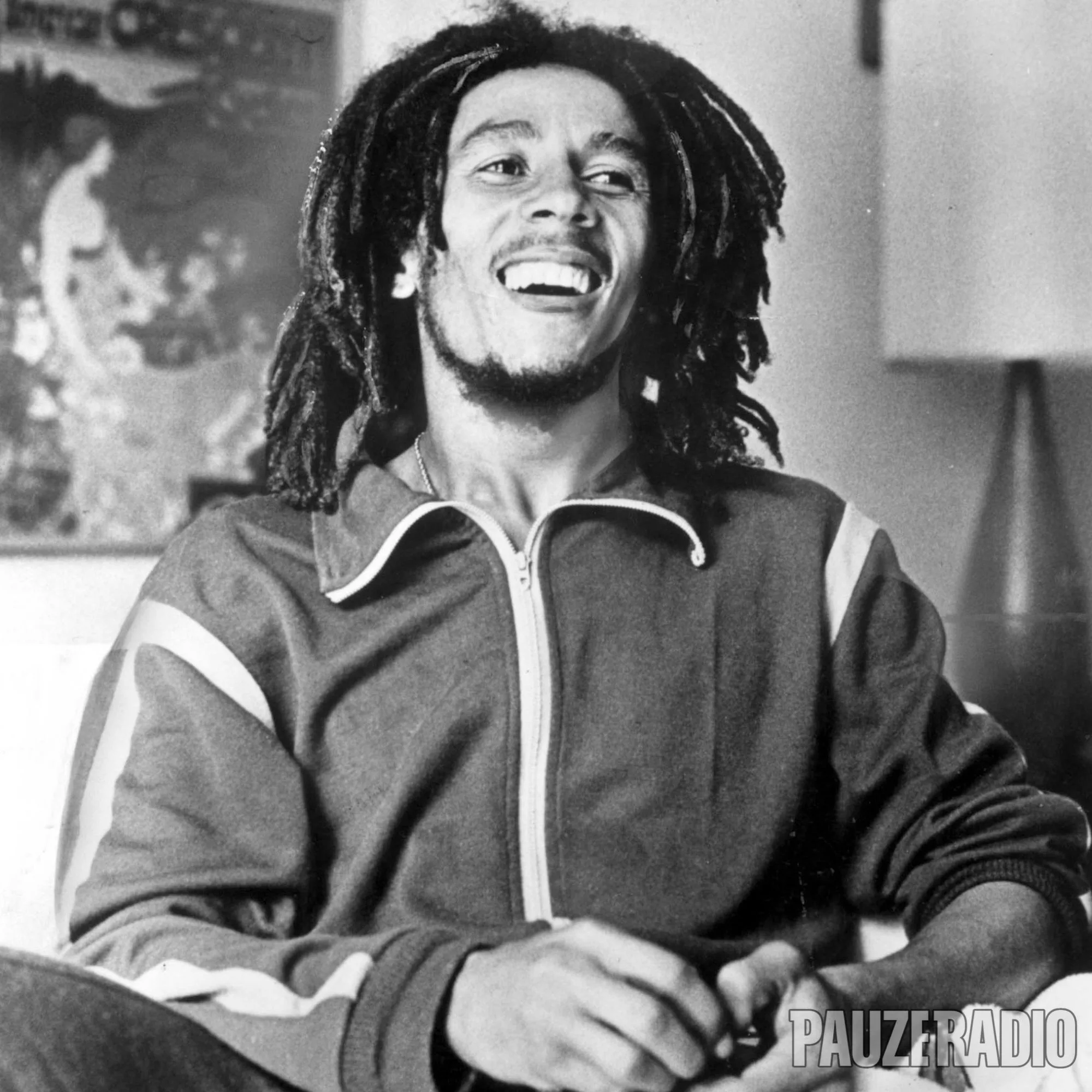
(Picture credit: Bob Marley, circa 1976. Photographer unknown. Source: New York Amsterdam News / Wikimedia Commons. US public domain.)