
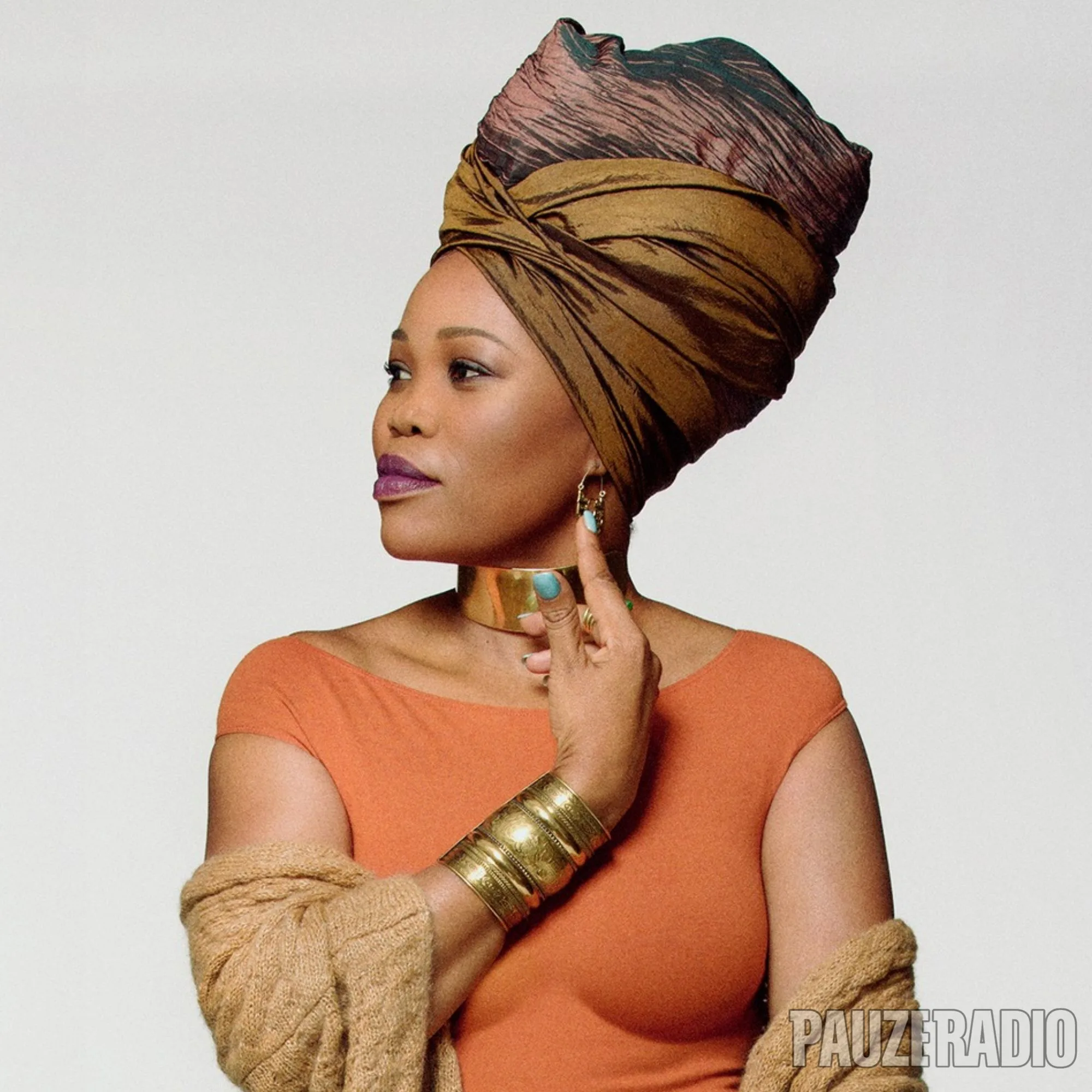


Queen Ifrica
Queen Ifrica, born Ventrice Morgan on 25 March 1975 in Spanish Town, St Catherine, Jamaica, is a reggae singer, songwriter and deejay. She grew up with her grandmother in a Rastafarian community in St Mary and moved to Montego Bay at nine to live with her mother. She first met her father, ska and rocksteady pioneer Derrick Morgan, in her twenties, by which time she had already started performing.
The Flames Years
Her first break came in 1995 when she won a talent competition at Club Inferno in Montego Bay. She went on to perform at Reggae Sumfest’s Singers’ Night, and in 1998 she sang at a tribute to Garnett Silk, her favourite singer. She was drawn to the conscious reggae of that era, listening to artists such as Anthony B, Luciano and Tony Rebel. It was Rebel who heard her at the tribute and brought her into Flames Productions, which issued “Royal Love” the following year.
“Just My Bredrin”, “Randy” and “Below the Waist” helped build her following in Jamaica. She could carry a melody through a love song or sharpen her delivery into a deejay chant. That range came through on Fyah Muma, her first album, released by Flames in 2007. Produced by Tony Rebel and named after her nickname, it brought “Randy” and “Below the Waist” together with songs such as “Black People” and “Lengthen My Days”.
Montego Bay
VP Records released Montego Bay in 2009, named after the city where she got her start. “Lioness on the Rise” became one of its best-known songs. When she spoke about it at the time, she described change as something women could begin with the people around them, in their own homes and communities.
On “Daddy”, a child speaks directly to her abuser, while “Streets Are Bloody” addresses violence in Jamaican communities. By this stage, her live work had taken her from Reggae Sumfest in Montego Bay to Reggae on the River in California.
She was still voicing the same riddims as Tony Rebel, a connection you can hear in Pauzeradio’s 2010 Reggae Showcase, episode #159 of the Unique Reggae Mix Show. In the fourth part, “Essence of My Life” runs straight into Rebel’s “Life Don’t Take No Holiday”, both on the Marcus Garvey riddim.
Climb
In the years after Montego Bay, she worked with Silly Walks Discotheque on “Make You Rock” in 2014 and released “Ask My Granny” in 2016. The latter appeared on Climb, her second album for VP Records, which debuted at number one on Billboard’s Reggae Albums chart in March 2017.
“Trueversation”, a duet with Damian “Jr. Gong” Marley, makes its point about listening by giving both singers room to answer each other. On “Black Woman”, she speaks directly to young Black women about valuing themselves. It picks up the conversation she began on “Lioness on the Rise”, bringing it from what women can do in their communities to how they see themselves.
After Climb
“Cease All War” followed in 2018. The next year she played Rototom Sunsplash in Spain and OverJam in Slovenia, then appeared at Rebel Salute in Jamaica in 2020.
In the studio, she worked with Stephen Marley on Nina Simone’s “Four Women”, singing from the perspectives of four Black women whose lives are shaped by racism and colourism. First released in 2021, her recording opened Celebrating Nina: A Reggae Tribute to Nina Simone the following year.
Around the same time, she began working with producer Junior Brown, also known as IamNuhRush. On “Predator’s Paradise”, issued through his Nuh Rush Records, she asked how perpetrators of sexual abuse so often escape accountability. She and Brown continued working together on “Serendipity”, “Proud of Me” and “Tallawah” between 2022 and 2024.
In 2024, she recorded “I Love Rastafari” with her son Imeru Tafari and performed at Reggae Land in Britain. She returned to Rebel Salute in Jamaica in January 2025, then released “Did You Pray” on the Consequence riddim that March.
Breath of Life
Nuh Rush Records released Breath of Life on 14 August 2026, with distribution through Tuff Gong International. Brown produced most of the thirteen tracks, while Stephen Marley produced the title song, a prayer of gratitude set to an acoustic arrangement. The album moves from the playfulness of “Spoonful” to a call for African unity on “Weeping Willow”. Later that month, she brought the new material to the Jazz Cafe in London.
On “Mom Like Me”, she sings about how hard it is to watch your children struggle when you want to help. “New Version of Me” brings her family into the recording itself. Imeru Tafari, who sang with her on “I Love Rastafari” in 2024, returns alongside his siblings Tanzie and Malawi.
From the early Flames records onwards, Queen Ifrica has used reggae to speak plainly about faith, women’s lives and what happens within families.
More than thirty years after her first break at Club Inferno, Queen Ifrica still draws on the two sides of her craft that came together in those early years. She can use melody to draw listeners into a song, then give a line the force of a deejay addressing a crowd. That combination has served her just as well on songs of faith as it has when she’s asked listeners to face what’s happening in their homes and communities.